07 — Product Design
DOGO

Summary
A concept app that connects dog owners with trustworthy dog sitters — built on the insight that trust, not search, is the real product.
Intro
Three weeks. Seven teammates. Three time zones. A UX design class project at Bittiger where I led design.
Imagine you cannot take your puppy on your summer trip. DOGO helps you find a satisfactory sitter — and, more importantly, helps you trust them before you have to.
01 — The Challenge
Finding a dog sitter you can actually trust is hard.
When a dog owner can't take care of their pup — a summer trip, a work emergency, a move — the options are all imperfect. A friend? Grandma? They may love the dog but lack the knowledge. A stranger sitter or pet store? Hard to trust without proof.
Our starting brief: build something better than asking around and hoping for the best.
02 — Initial Thoughts
Search is the obvious feature. It isn't the answer.
The first feature we wrote down was the easy one: search nearby sitters and pet stores, filtered by available time, home size, and price.
But search alone solves "find someone" — not "find someone I trust." What if the only nearby option turns out to be the equivalent of Irene's grandma, feeding chicken bones out of love? We needed to go deeper before designing screens.
03 — Research
19 dog owners. Three stories that defined the product.
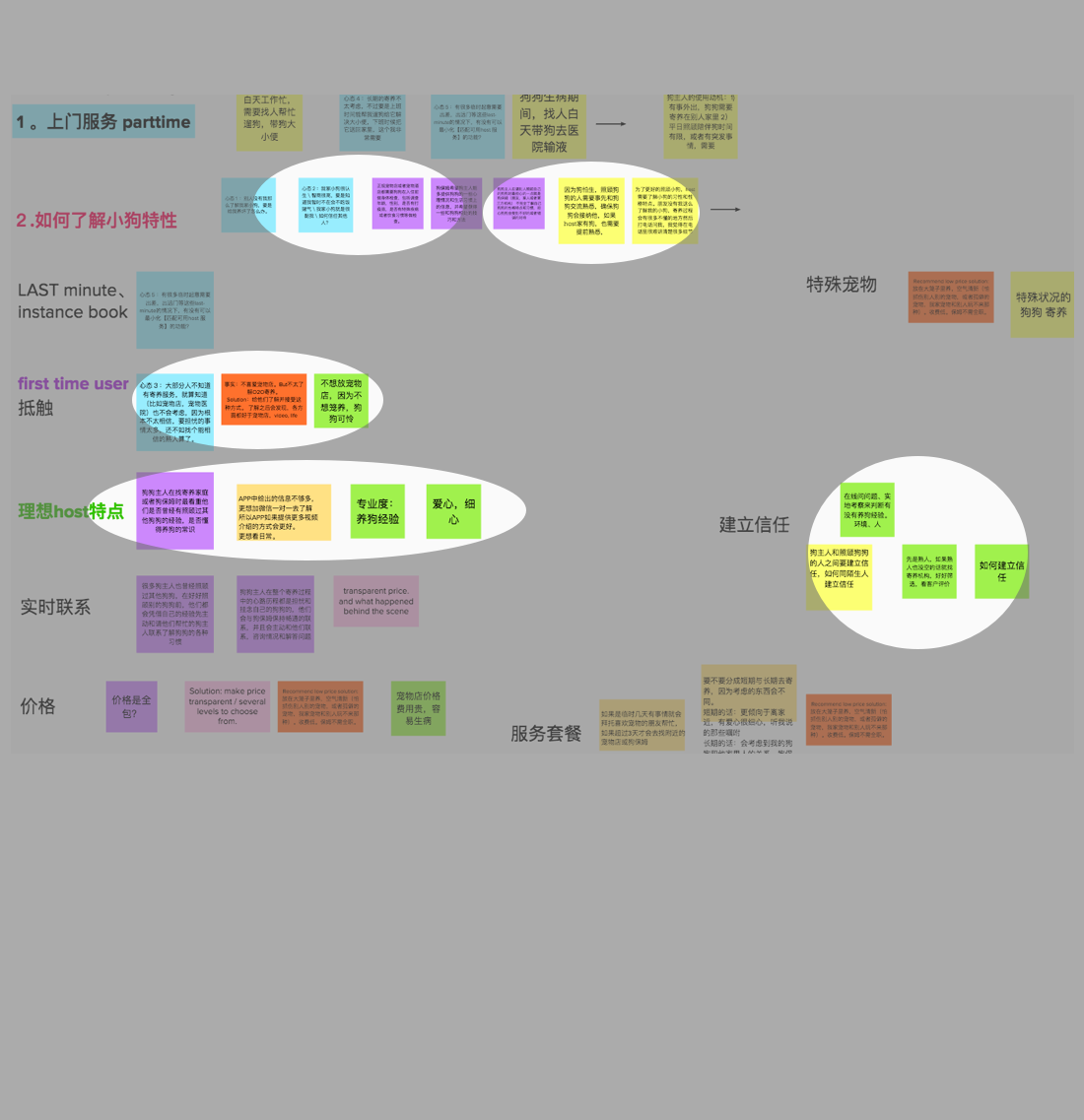
We interviewed 19 dog owners and focused on their real stories of finding sitters — what went well, what went wrong, what they wished existed. Three quotes captured the pattern.
Irene once sent her dog Tony to her grandma's. Grandma fed Tony chicken bones, thrilled to see him eat — not knowing that thousands of dogs die every year from exactly that.
Nina swore off pet stores: "Staff there aren't professional and lack experience. I don't know if they treated my dog properly."
Jonny had tried a dog-walking app but never actually booked. Even with GPS tracking, he couldn't get past the question: "Is this person trustworthy with my dog?"
Leonard's dog is smart and aloof — when sent to a friend's house, the dog went on a hunger strike in protest.



04 — Synthesis
Trust = Match + Professional.
Owners talk about their dogs the way parents talk about their kids. Across every interview, the word that kept surfacing was trust — and trust didn't come from certificates or reviews alone.
After categorizing the data on a shared real-time board across our three time zones, trust resolved into two ingredients:
Match — the dog likes the sitter and the new place; the sitter understands and is concerned about the dog.
Professional — the sitter has the knowledge and experience to keep the dog safe. (No chicken bones.)
Both have to be true. Either one alone is not enough.
05 — Design Solution
A community, not a marketplace.
Trust isn't built in a single transaction. So DOGO isn't a search app with sitters bolted on — it's a community of dog lovers where matching and trust accumulate over time.
Owners share daily moments of their dogs, attend offline events together, and gradually learn who they'd want to leave their dog with. By the time they need a sitter, the relationship is already there.
Five core intents anchor the product: Moments (online community), Events (offline meetups), Hosts (verified sitters and pet stores), Chat, and Profile. Booking lives underneath the relationships, not on top.
06 — Storyboard
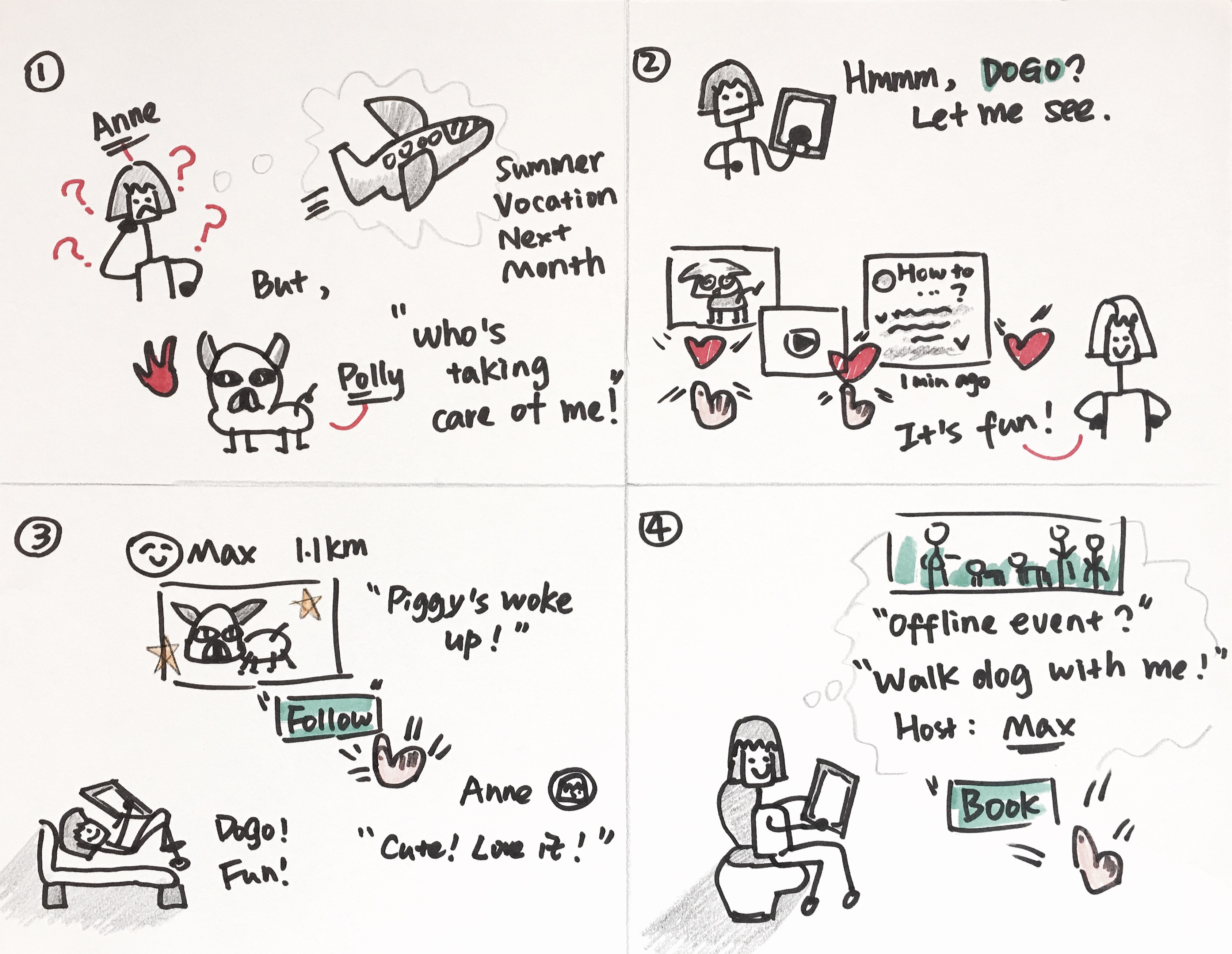
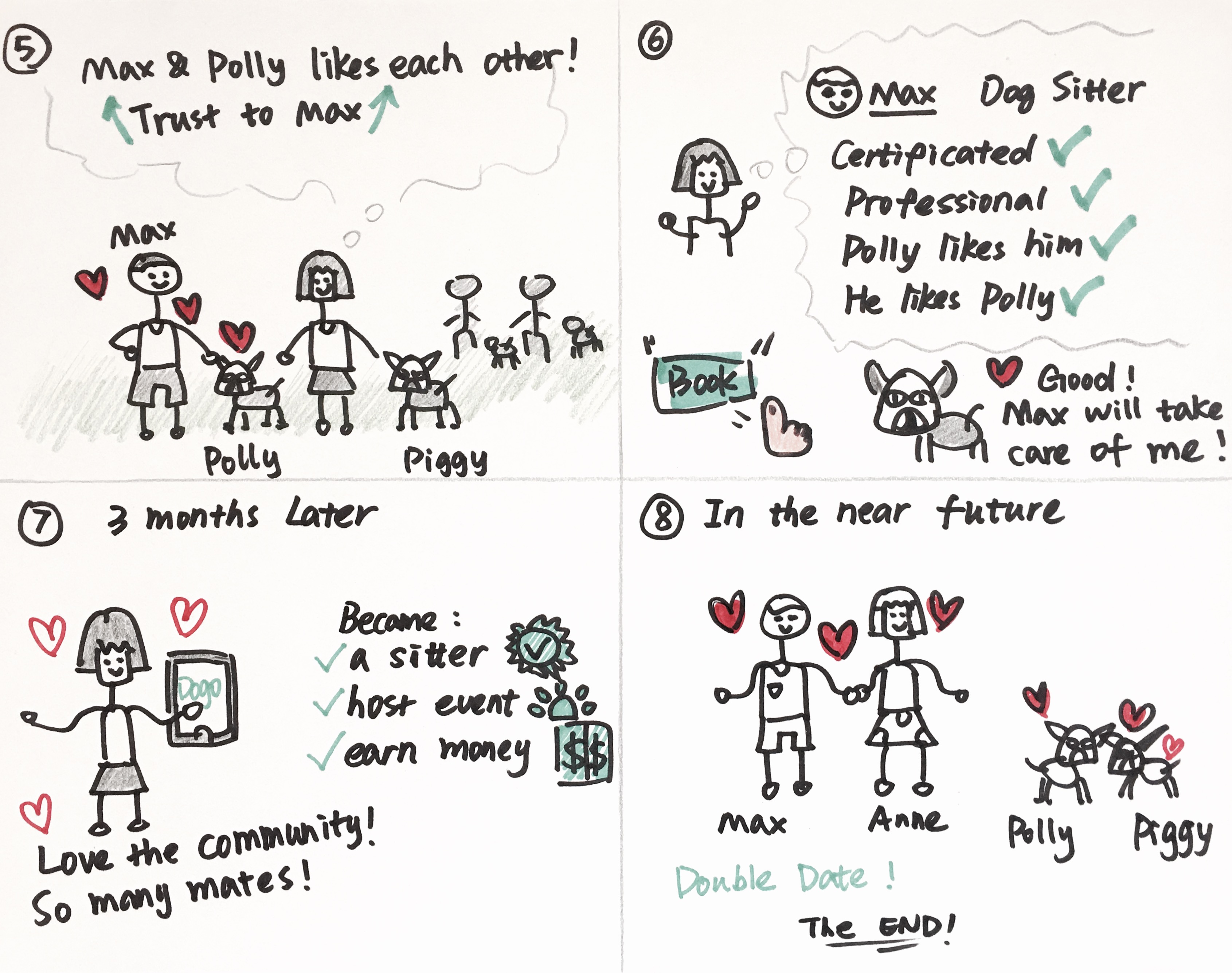
Anne's story with DOGO.
To pressure-test the concept, we storyboarded a complete journey — Anne moving from "I need a sitter next month" to "I trust this person with my dog." The story made it clear that DOGO isn't just a search tool; it's the connective tissue between owners and sitters.
07 — Lo-Fi Wireframes
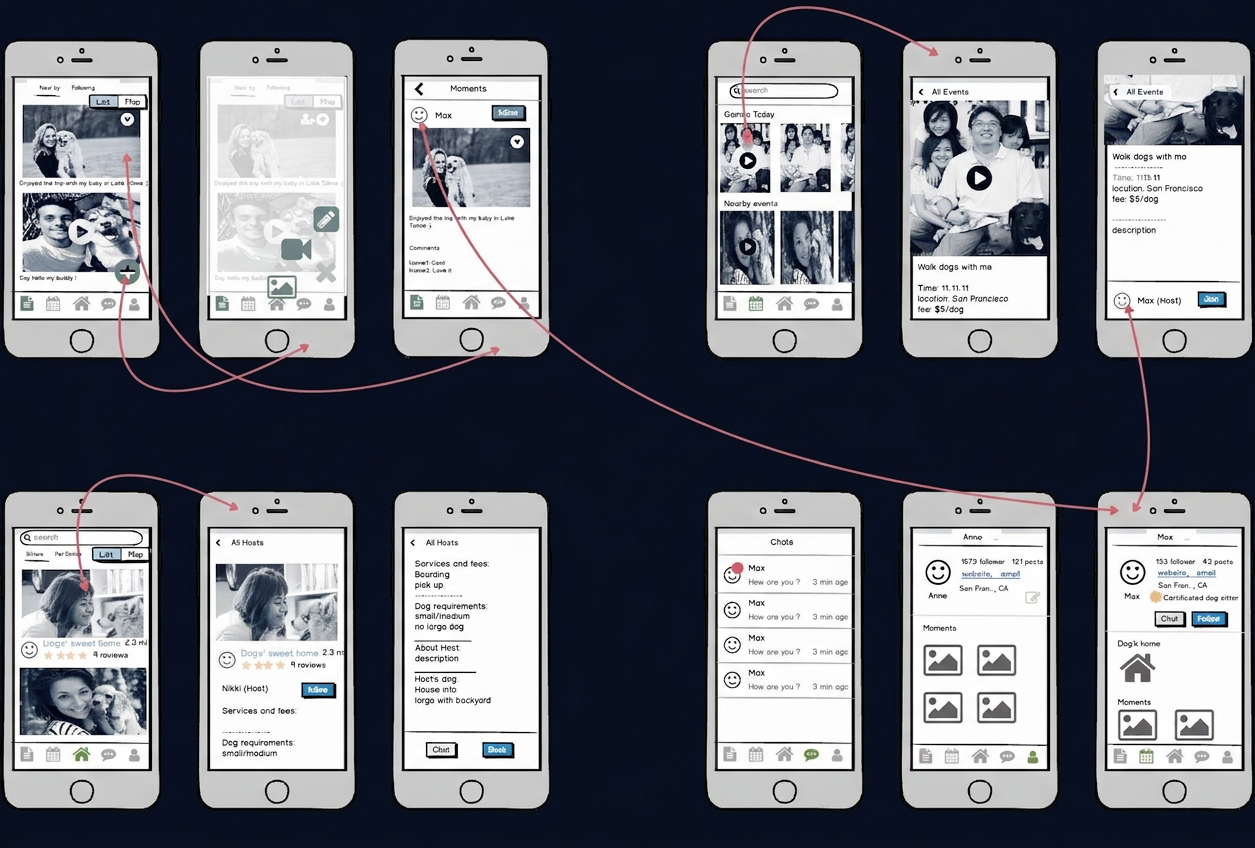
Five menus, one job each.
With clear goals and a user flow, we defined the main menu around the five intents — each with a focused job:
1. Moments — view, create, and upload photos, videos, and articles. 2. Events — view and create offline meetups; book to join. 3. Hosts — browse nearby sitters and pet stores; request to book. 4. Chat — message anyone in the community before committing. 5. Profile — your dog, your hosting, your moments.
08 — Visual Direction
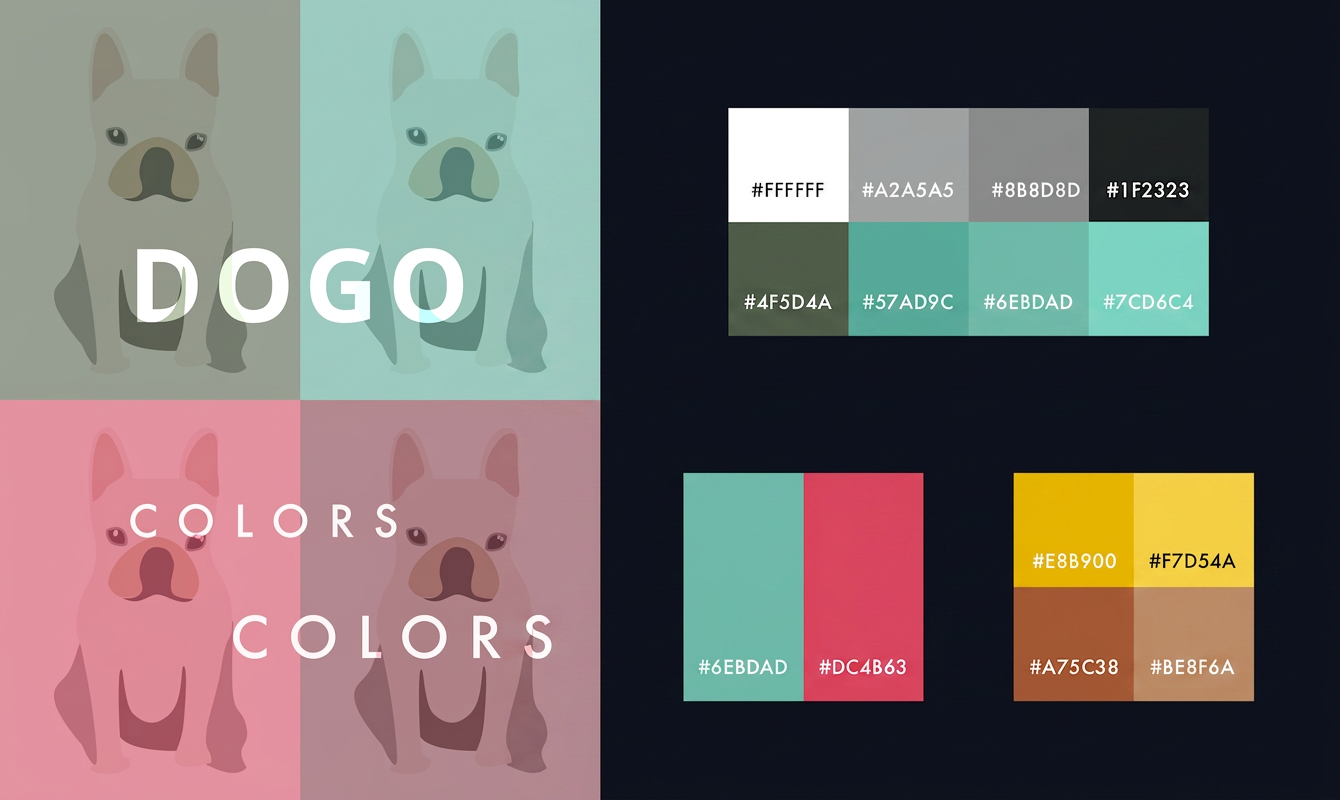
Warm enough to feel like family.
The color story is warm and soft — closer to a family photo album than a service marketplace. Type is gentle; certificates and verification surface as small marks rather than badges. Professionalism is shown, never shouted.
09 — Hi-Fi · Moments
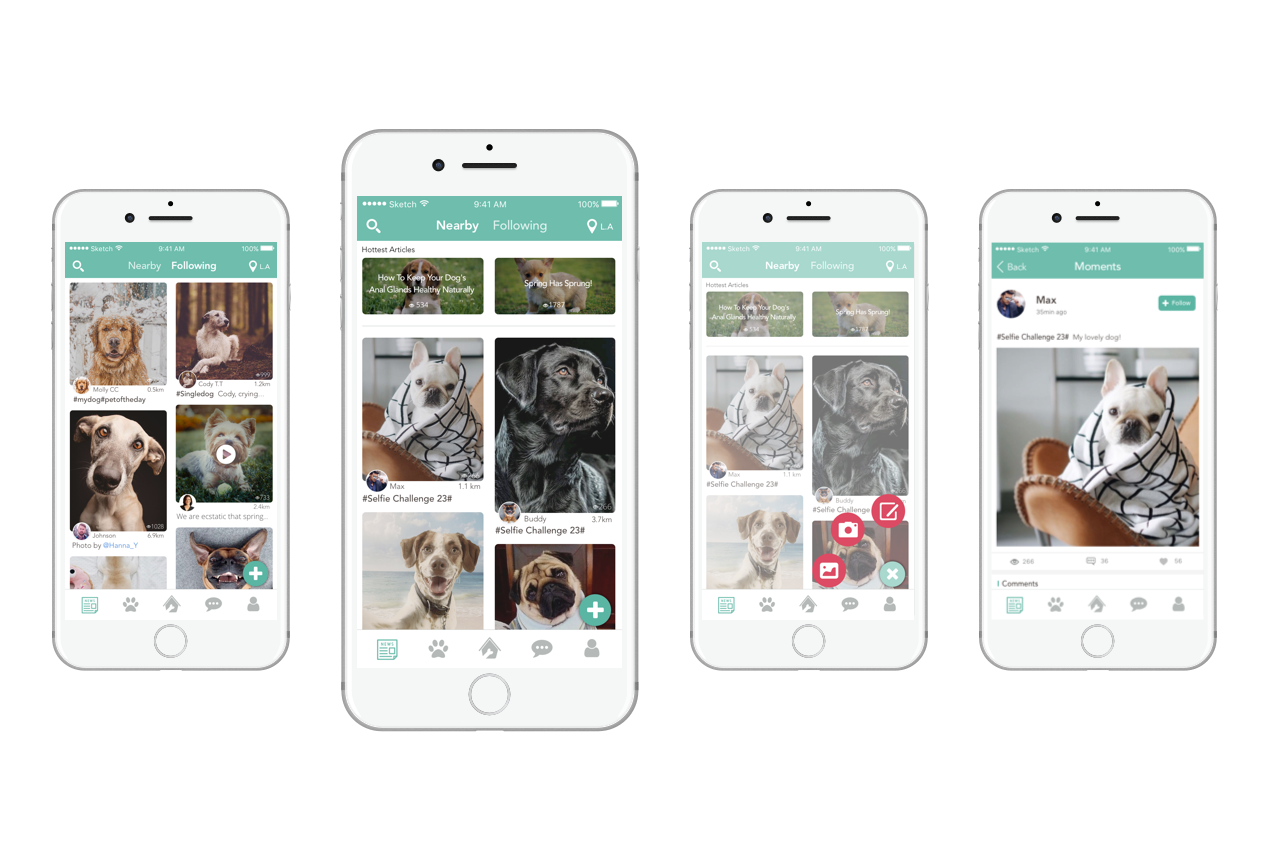
The first thing you see is other people's dogs.
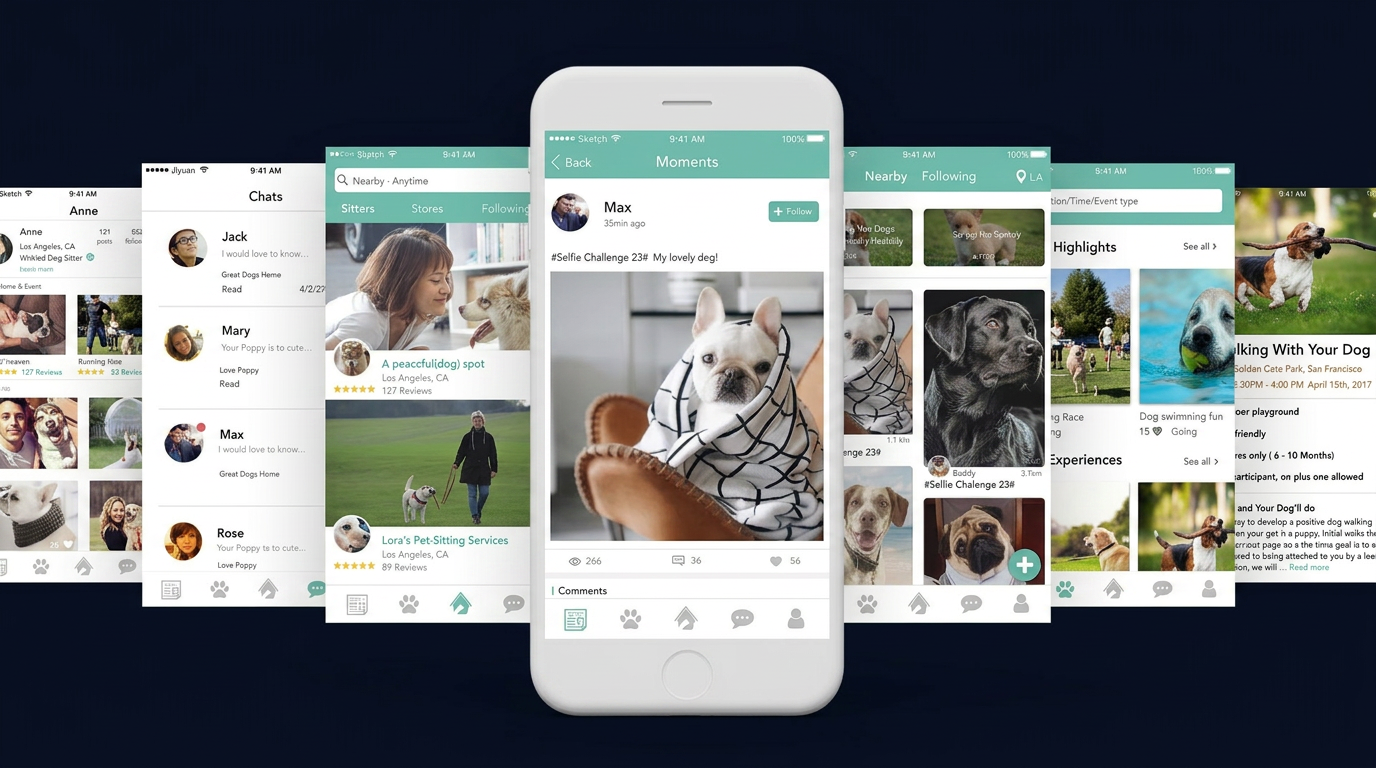
Moments is the first surface after onboarding. The goal: make sure new users land in a feed of fresh, interesting photos, videos, and short articles about the dogs around them — so the community feels alive before any sitter is searched for.
10 — Hi-Fi · Events
Meet your future sitter in person.
Browse and search meetups around you. Events are the bridge from online community to offline trust — a low-stakes way to get to know a potential sitter while the dog has fun.


11 — Hi-Fi · Hosts
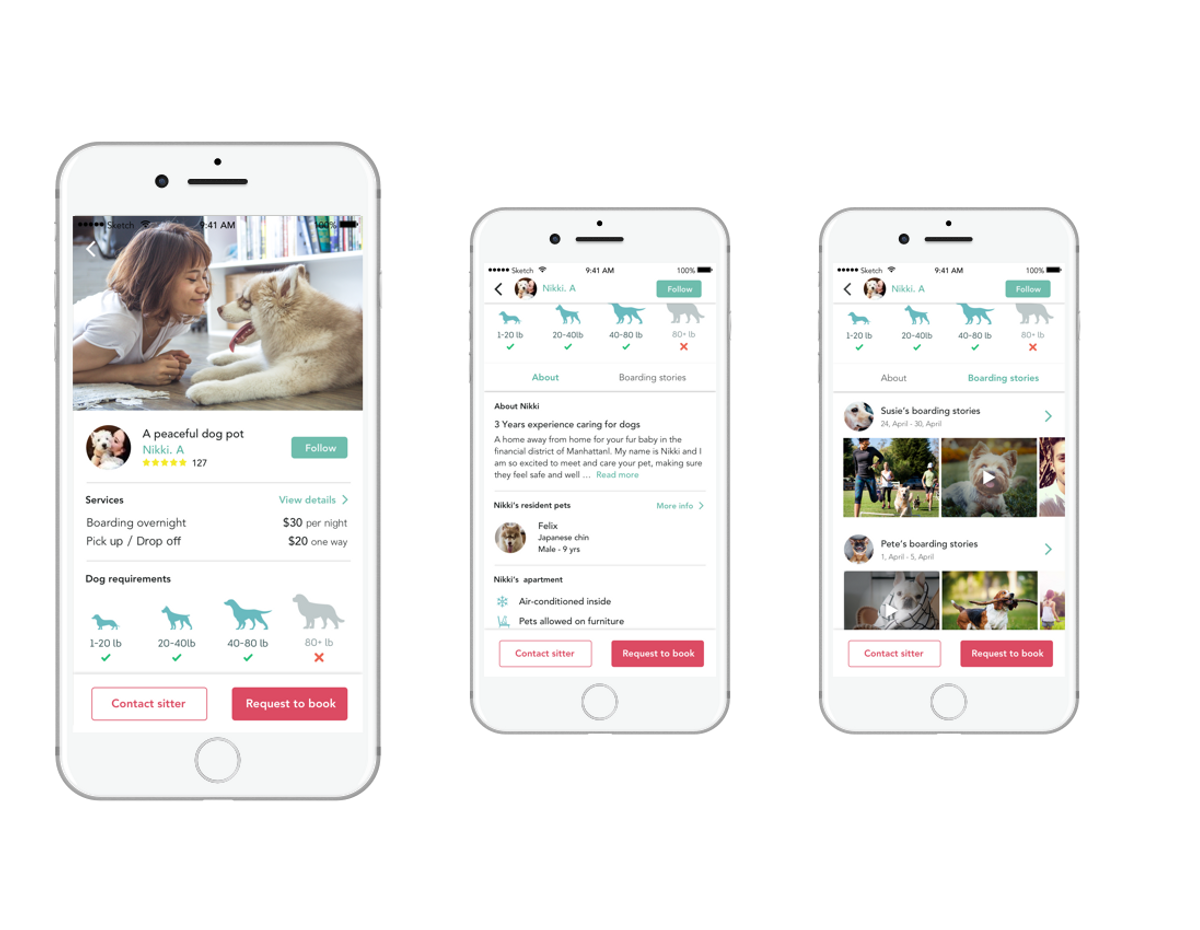
Verified sitters, filtered to your dog.
Hosts surfaces nearby sitters and pet stores with a filter to narrow by what matters — availability, home type, price, services. A host can be a dog owner like Anne or a professional sitter; either way, only verified certificates surface the trust mark.
Host details cover price, service types, and house rules. Request to Book moves the booking forward; Contact Sitter drops directly into chat — because most owners want to ask one more question first.

12 — Hi-Fi · Chat
Ask before you book.
Chat connects you with anyone in the community — a sitter, an event host, or someone whose dog photos you love. Because every interview confirmed the same thing: people need to talk to a sitter before they'll trust them, no matter how good the profile looks.

13 — Hi-Fi · Profile
Who you are, who your dog is.
Three sections: basic info (with a verified mark for professional sitters), hosting (events you run or a dog's home you offer), and your moments. Your own profile shows Edit; someone else's shows Follow and Chat.

14 — Reflection
What three weeks taught me.
Three weeks, seven people, three time zones, one async board. The hard part wasn't the screens — it was holding the team to the insight that trust, not search, was the real product, and resisting the pull to ship a generic marketplace.
If I picked this up again, I'd prototype the Match signal earlier: how does the app actually surface that this sitter and this dog are right for each other, beyond profile cards and reviews?